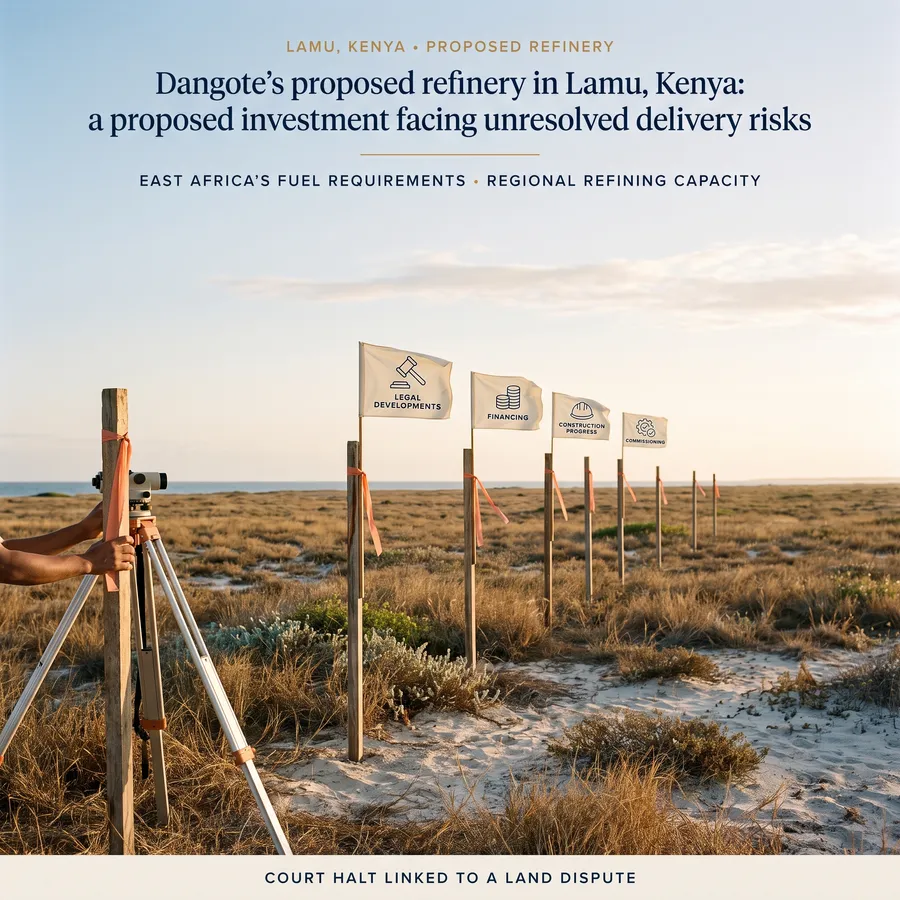
"Plans for Dangote’s proposed refinery in Lamu, Kenya, are drawing attention to both East Africa’s fuel requirements and the challenges of delivering industrial projects. The development is intended to expand regional refining capacity, but its path to construction remains contested. Earlier reporting by The Eastleigh Voice described President William Ruto’s view that several refinery projects could serve the region. Subsequent coverage by Semafor on 12 October reported a court halt linked to a land dispute, alongside wider political and environmental debate.
The project should therefore be understood as a proposed investment facing unresolved delivery risks. Announced capacity, investment values and completion targets are different from an operating facility able to supply customers. For fuel buyers and industrial users, the longer-term question is whether additional regional refining can improve product availability and supply resilience. That cannot be assumed before the project progresses through its outstanding stages.
Purchasing plans should continue to reflect supply that is actually available. Businesses considering future partnerships can track legal developments, financing, construction progress and eventual commissioning before assigning firm volumes to the project. Equipment and service suppliers should similarly separate general expressions of interest from documented procurement opportunities. Clear information about the contracting entity, project scope and delivery timetable will matter as plans develop.
The Lamu debate illustrates why infrastructure headlines need careful commercial interpretation. Regional production could change sourcing options over time, but buyers gain the most useful perspective by following milestones and keeping near-term procurement decisions grounded in supply arrangements and current market conditions."