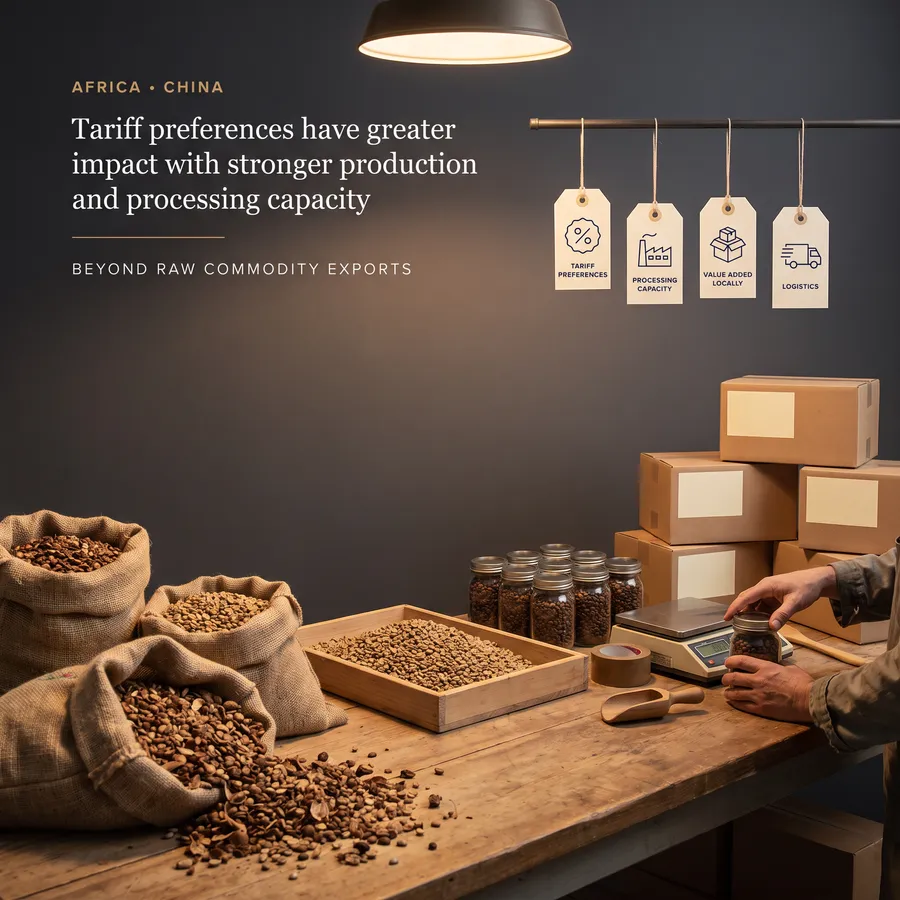
"Africa’s trade relationship with China is drawing renewed attention to the products African businesses can supply, as well as the market access available to them. A China Daily commentary argues that tariff preferences will have greater impact when accompanied by stronger production and processing capacity. The article highlights the importance of moving beyond raw commodity exports and developing goods with more value added locally. It also points to logistics and productive capability as factors that determine whether market access becomes commercial activity.
For African suppliers, that argument raises a practical question: can the business deliver a product that meets the buyer’s requirements, consistently and at a competitive landed cost? A favourable trade policy does not answer questions about quality, volume or customer demand. Producers exploring China can begin with a precise product offer and an identified purchasing segment. Packaging, shelf life, specifications and delivery frequency should be discussed before committing to an expansion.
Buyers seeking African products can help by providing clear qualification criteria and realistic forecasts. That information can guide investment in processing, testing and the equipment needed to achieve repeatable output. Commercial calculations should use the requirements applicable to the shipment. Businesses need to confirm product eligibility and documentation rather than assume that a broad policy headline settles every transaction.
The wider opportunity is to connect market access with manufacturing capability. Relationships built around dependable supply, transparent specifications and a shared understanding of costs are more likely to generate repeat orders than interest based on tariff preferences alone."