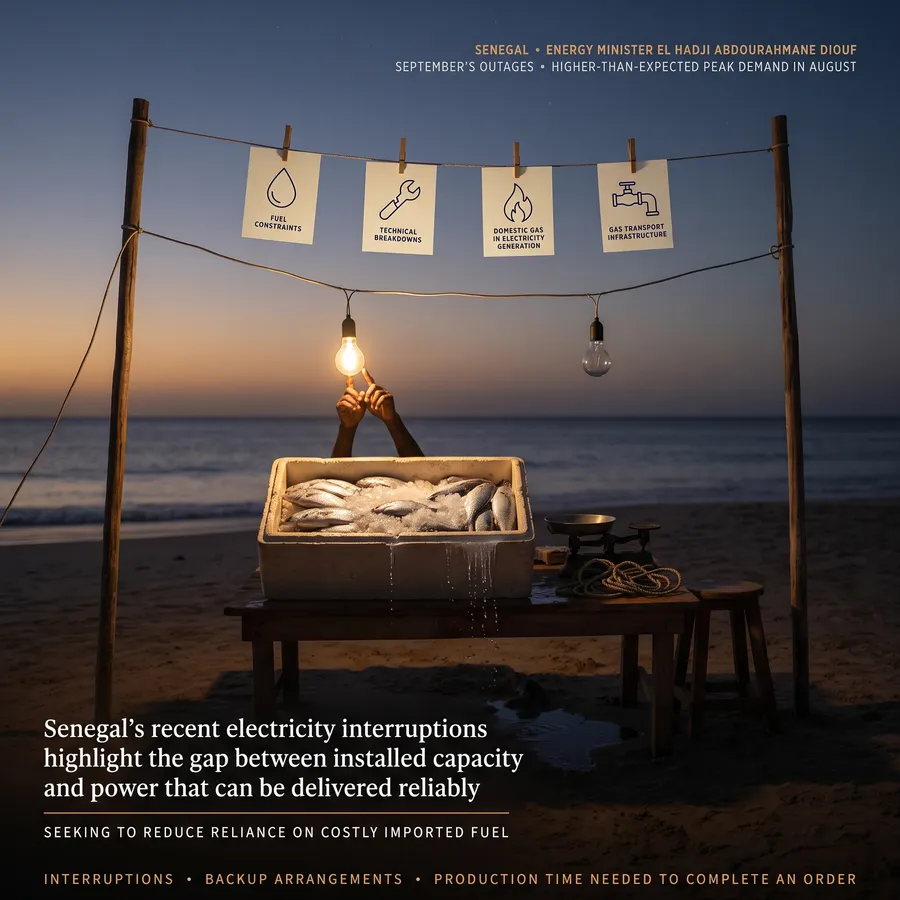
"Senegal’s recent electricity interruptions have highlighted the gap between installed generating capacity and power that can be delivered reliably. Energy Minister El Hadji Abdourahmane Diouf said September’s outages strengthened the case for using domestic gas in electricity generation. Reuters, in coverage carried by TimesLIVE, reports that demand reached a higher-than-expected peak during hot weather in August. Fuel constraints and technical breakdowns prevented the system from consistently meeting demand, despite installed capacity exceeding that peak.
The minister also outlined plans for gas transport infrastructure as Senegal seeks to reduce reliance on costly imported fuel. Those plans describe a future direction rather than a solution to every electricity supply problem. For buyers sourcing from Senegal, power reliability can affect production schedules, storage and delivery commitments. A supplier’s operating conditions are therefore more informative than a national capacity figure.
Purchasing teams can discuss interruptions, backup arrangements and the production time needed to complete an order. For temperature-sensitive goods, the assessment should include storage and transport as well as the factory. Equipment providers may find longer-term relevance in gas infrastructure and electricity system development. However, a policy announcement should not be treated as a confirmed procurement opportunity without project-specific information.
Businesses considering new production facilities can evaluate the available service at the location and model the cost of managing interruptions. The immediate lesson is to connect energy planning with operational evidence. Future gas development could change Senegal’s supply mix, while today’s commercial decisions still depend on the reliability businesses can demonstrate at their sites."