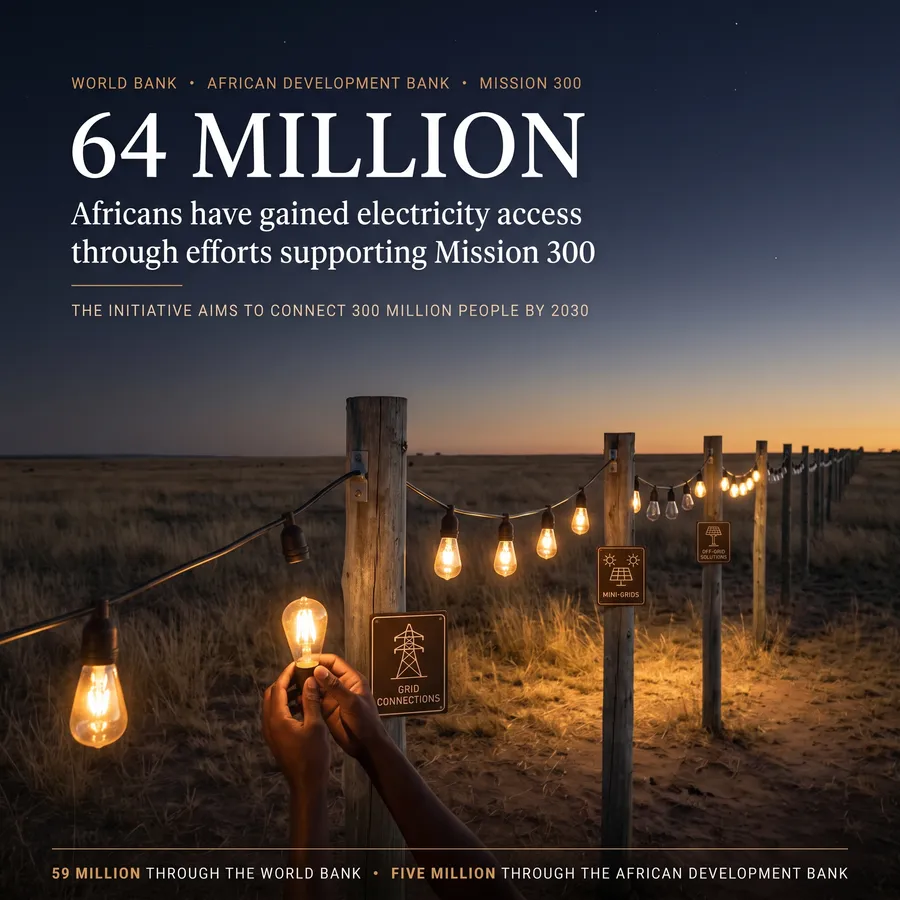
"The World Bank and African Development Bank report that 64 million Africans have gained electricity access through efforts supporting Mission 300. The initiative aims to connect 300 million people by 2030. Ghana News Agency reports that World Bank President Ajay Banga cited 59 million people reached through the World Bank and a further five million through the African Development Bank. The programme includes grid connections, mini-grids and off-grid solutions.
The figures describe access for people, rather than industrial generating capacity or a guarantee of uninterrupted electricity. Different connection models can support very different levels of commercial activity. For African buyers and suppliers, wider electricity access can gradually expand the market for equipment, services and productive appliances. Its value depends on the power available at a location and the needs of the business using it.
A food processor, workshop or cold-storage operator will need to establish whether a connection can support the intended machinery, operating hours and peak demand. The existence of electricity access alone does not settle those questions. Suppliers serving newly connected areas can improve their offer by matching equipment to local conditions and providing information on consumption, maintenance and technical support.
Buyers planning investment should also consider the cost of operation and the availability of service expertise over the equipment’s lifetime. Those factors influence whether a purchase remains useful. Mission 300’s reported progress points to a growing foundation for economic activity. Turning access into productive capacity requires suitable equipment, viable business models and dependable support around each installation."